
Adult SEO 17 min read

Adult SEO is the process of improving an adult website’s visibility in organic search through technical optimization, keyword research, useful content and relevant backlinks.
The fundamentals are familiar. Search engines still need to crawl your pages, understand their purpose and find enough evidence to rank them. The difficulty is applying those fundamentals in a market where advertising options are restricted, media-heavy pages create technical problems and reputable backlinks are unusually difficult to secure.
That changes the order in which the work should be done.
Successful adult SEO usually follows this sequence:
- Make the important pages crawlable and indexable.
- Organize the site around clear search intent.
- Improve thin category, profile and media pages.
- Establish transparent ownership and trust signals.
- Build relevant authority without manufacturing a suspicious link profile.
- Measure rankings, conversions and indexation continuously.
This guide explains how to execute that process—and where adult websites most often go wrong.
What Is Adult SEO?
Adult SEO is search engine optimization for businesses operating in adult or sexually oriented markets. This includes:
- Adult video and tube websites
- Cam and webcam platforms
- Dating and hookup websites
- Adult stores and sexual-wellness brands
- Escort directories and independent providers
- Adult games and AI applications
- Content creators and subscription platforms
- Adult affiliates and review websites
The objective is not simply to attract more visitors. It is to earn qualified organic traffic from searches that match the website’s content, audience and commercial offer.
That distinction matters. A high-volume keyword can produce little revenue when its intent does not match the page. A smaller comparison, location or problem-based query may bring fewer visitors but substantially more signups, purchases or enquiries.
Good adult SEO therefore connects three things:
- What the audience is searching for
- What the website can genuinely satisfy
- What the business wants the visitor to do next
How Adult SEO Differs From Conventional SEO
Search engines do not require an entirely separate optimization system for adult websites. The same foundations—crawlability, relevance, content quality, usability and authority—still apply.
The operating environment, however, is different.
Advertising options are limited
Many advertising and social platforms prohibit or heavily restrict sexually explicit products and services. An adult business often cannot use paid media to compensate for weak organic visibility.
Organic search is therefore not just another acquisition channel. For many adult businesses, it is the primary source of sustainable demand.
SafeSearch can limit visibility
Google uses systems designed to prevent people from unexpectedly encountering explicit content. Pages classified as explicit may be filtered when SafeSearch is enabled and may not qualify for certain search features.
This is not the same as a blanket ranking penalty. It does mean adult websites need to understand how their content is classified and which searches can realistically display it.
Google recommends allowing its crawler to access content without being blocked by an age gate, grouping explicit pages appropriately and using explicit-content metadata only on pages that actually contain sexually explicit material. See Google’s guidelines for explicit content.
Adult websites are frequently media-heavy
Large images, video players, advertisements, tracking scripts and pop-ups can make adult websites slow and difficult to use—especially on mobile devices.
A visually impressive page is not useful to search engines if the primary content is hidden behind scripts, and it is not useful to visitors if it takes several seconds to become interactive.
Thin and duplicated pages multiply quickly
Tube sites, directories and marketplaces can generate thousands of category, tag, filter, performer and location pages. Many contain almost identical media or only a few thumbnails.
This creates several problems:
- Search engines spend time crawling low-value URLs.
- Important pages compete with near-duplicates.
- Internal authority becomes distributed across too many destinations.
- Thin pages are discovered but never indexed.
- Multiple pages compete for the same keyword.
More pages do not automatically create more visibility. Every indexable URL needs a distinct purpose.
Acquiring credible backlinks is harder
Many mainstream publishers decline adult businesses regardless of the quality of the pitch. The number of relevant, established and editorially managed websites willing to link to adult content is limited.
That makes backlinks a constraint—but it also creates an opportunity. Competitors that rely on automated links, recycled networks or low-quality directories can often be overtaken by a smaller number of relevant, properly vetted placements.

Step 1: Fix Crawling and Indexation
Before creating more content or acquiring backlinks, determine whether search engines can access and index the pages that already exist.
Start with Google Search Console. Review the Pages report and compare indexed URLs with URLs that are:
- Crawled but not indexed
- Discovered but not indexed
- Excluded by a
noindexinstruction - Blocked by robots.txt
- Treated as duplicates
- Assigned a different canonical URL
- Returning redirects or errors
Do not evaluate these categories in isolation. A tag page excluded from the index may be working exactly as intended. A major commercial category excluded as a duplicate may represent a serious problem.
The objective is not to index every available URL. It is to ensure that every valuable URL is accessible, unique and internally supported.
Control faceted navigation
Filters for price, location, category, attribute, popularity and date can generate an enormous number of URL combinations.
Decide which filtered pages have genuine search demand. Allow those pages to be indexed only when they provide unique value. Consolidate, canonicalize, block or apply noindex to combinations that users do not search for.
The correct implementation depends on how the site handles navigation and URL parameters. Avoid applying one rule across every filtered page without considering how search engines discover your products or content.
Improve thin category and profile pages
A page containing a heading and several thumbnails gives search engines little context.
Important category, performer, model, product and location pages should provide useful information such as:
- A clear description of what the visitor will find
- Distinctive attributes or selection criteria
- Pricing or membership information where applicable
- Frequently asked questions
- Related categories or profiles
- Descriptive internal links
- Original images, video information or product specifications
Do not add text simply to reach a word count. The information should help a visitor understand the page and decide what to do next.
Make age gates crawler-accessible
An age-confirmation screen should not replace the underlying page for search engine crawlers.
If Googlebot receives only the age gate—or cannot access meaningful content until a JavaScript interaction occurs—the page may be difficult to crawl, classify and rank.
Use Search Console’s URL Inspection tool to test the rendered page. Confirm that Google can see the main content, title, headings, links and structured data.
Age-verification and regional-access requirements vary by jurisdiction. Technical implementation should be reviewed alongside appropriate legal advice.
Step 2: Build an Adult SEO Keyword Strategy
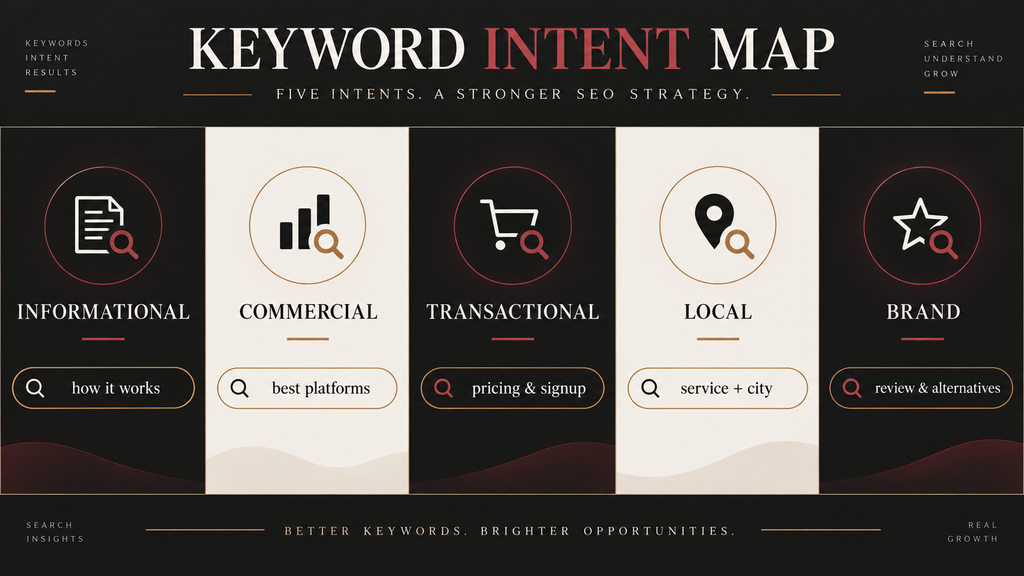
New adult websites frequently target keywords that are too broad to be practical.
Terms such as “porn,” “cams” or “dating” are controlled by established platforms with enormous content libraries, powerful brands and extensive link profiles. A newer website rarely has a realistic path to those searches in the short term.
The better approach is to identify narrower searches with clear intent.
Target keyword modifiers
Useful modifier categories include:
- Location: country, state, city or neighborhood
- Audience: age group, interest, orientation or relationship type
- Format: live, video, chat, game, product or subscription
- Comparison: “X vs Y,” “best X,” or “alternatives to X”
- Commercial: price, cost, discount, subscription or trial
- Reputation: review, safe, legitimate or scam
- Problem: how something works, how to fix it or what to expect
- Brand: brand name plus review, pricing, login or alternatives
A broad keyword might generate more searches, but a specific keyword often provides a much clearer page requirement.
Separate keywords by intent
Keywords that look related may require different content.
For example:
- “Adult cam sites” may require a category or comparison page.
- “How do cam sites work?” requires an informational guide.
- “Cam site pricing” requires clear commercial information.
- “Brand A vs Brand B” requires a direct comparison.
- “Cam sites in London” requires a genuinely localized experience.
Trying to satisfy all of these searches with one generic article usually produces a page that is not the best answer for any of them.
Create one strong page for each distinct intent. Combine closely related keywords on that page rather than generating a separate thin article for every variation.
Analyze the competitor immediately above you
Market leaders reveal what is possible, but they do not always reveal what is achievable next.
Review the two or three pages immediately above your position. Compare:
- Page type
- Search intent
- Topic coverage
- Internal links
- Referring domains
- Content format
- Freshness
- Trust signals
- Calls to action
The page one position above you frequently provides a more realistic roadmap than the strongest domain in the industry.
Step 3: Strengthen the Technical Foundation
Indexation is only one part of technical adult SEO. The website must also be fast, mobile-friendly and easy to navigate.
Improve Core Web Vitals
Adult websites often load numerous thumbnails, video previews, advertisements and third-party scripts. These can delay the largest visible element, move content during loading and make interactions feel unresponsive.
Priority improvements include:
- Compressing images and serving modern formats
- Defining image dimensions to prevent layout shifts
- Lazy-loading media below the visible screen
- Using a content delivery network
- Reducing unnecessary plugins and third-party scripts
- Loading advertising without displacing primary content
- Using lightweight video thumbnails before loading a full player
- Testing performance on a real mobile connection
Page speed should be evaluated by template. A fast blog post does not prove that category, search and video pages perform well.
Use a clear site structure
Important pages should be reachable through crawlable links rather than depending on an internal search box.
A practical structure might follow:
- Homepage
- Primary category
- Subcategory or location
- Product, profile or content page
- Subcategory or location
- Guides
- Supporting article
- Primary category
Use descriptive anchor text and breadcrumbs to explain these relationships.
Avoid burying revenue-driving pages several levels deep or creating hundreds of tags with no editorial purpose.
Maintain a clean XML sitemap
Your sitemap should contain canonical, indexable URLs that return a successful response.
Remove:
- Redirected URLs
- Error pages
noindexpages- Duplicate parameter URLs
- Low-value search result pages
- URLs that are blocked from crawling
For video-heavy websites, a properly configured video sitemap may help search engines understand video content. Ensure search engines can access the thumbnail and video files described in the sitemap.
Use structured data where appropriate
Structured data helps search engines understand the purpose and components of a page. Depending on the business, useful types may include:
- Article
- BreadcrumbList
- Product
- Organization
- LocalBusiness
- VideoObject
Only mark up information that is visible and accurate. Structured data does not create rankings by itself, and explicit pages may remain ineligible for certain search features.
Step 4: Optimize Every Important Page
On-page SEO should make the page’s subject and purpose immediately clear.
Every indexable landing page should have:
- A unique title tag
- A compelling meta description
- One descriptive H1
- A logical H2 and H3 structure
- A clean canonical URL
- Original, intent-matched content
- Descriptive image alt text
- Useful internal links
- A clear next action
Write titles for the query and the click
Include the primary topic naturally, then communicate why the result is worth choosing.
Weak:
Adult Website Page
Stronger:
Adult SEO Guide 2026: How to Rank an Adult Website
For commercial pages, include the service and differentiator:
Adult Link Building Services for Sustainable Rankings
Avoid repeating the keyword unnaturally. A clear title is more valuable than a title containing every possible variation.
Improve media pages with useful context
A video, gallery or profile page does not require an artificial essay. It does require enough original information for users and search engines to understand what makes the page distinctive.
Depending on the page type, useful content may include:
- A concise original description
- Participants or performers
- Category and format
- Runtime or specifications
- Publication date
- Related content
- Transcript or captions where appropriate
- Membership or access requirements
Automatically generated descriptions should not be treated as a substitute for original editorial value.
Step 5: Create Content That Builds Topical Authority
A successful adult content strategy should support the website’s commercial pages rather than publish disconnected articles for traffic alone.
Build content around recurring customer questions:
- How does the service work?
- What does it cost?
- Is it safe and legitimate?
- What happens after signup?
- Which option is best for a particular need?
- What legal or privacy considerations apply?
- How does one provider compare with another?
- What should a first-time customer expect?
Match the format to the business
| Business type | High-value content opportunities |
|---|---|
| Adult store | Buying guides, product comparisons, material guides, care instructions and discreet-shipping information |
| Cam platform | Pricing, performer discovery, safety guidance, platform comparisons and feature explanations |
| Dating site | Location pages, audience-specific guides, safety resources, pricing and app comparisons |
| Creator | Branded profile hub, niche pages, interviews, press coverage and name-based search content |
| Escort directory | Genuine location pages, verification standards, safety information and transparent listing policies |
| Adult game or AI platform | Feature pages, platform comparisons, use cases, pricing and technical guides |
| Tube or media site | Strong category pages, performer pages, video metadata, editorial collections and original commentary |
The goal is not maximum publishing volume. It is a connected library in which supporting articles strengthen the relevance and authority of key landing pages.
Refresh pages instead of duplicating them
If an existing URL already has backlinks, history or impressions, update it rather than publishing another page targeting the same search.
A substantial refresh may include:
- Correcting outdated information
- Adding missing subtopics
- Improving examples
- Consolidating overlapping articles
- Updating screenshots and data
- Strengthening internal links
- Revising the title and introduction
Avoid changing a successful URL unless there is a compelling technical reason.
Step 6: Build Adult Backlinks Without Manufacturing Risk
Backlinks remain important because they help search engines discover pages and understand which websites have earned attention from others.
In adult markets, the challenge is not finding someone willing to sell a link. The challenge is finding relevant websites with genuine audiences, stable indexing and responsible editorial standards.
Adult link-building methods that can create value
Digital PR
Original research, industry surveys, trend analysis and expert commentary can earn coverage from adult-industry and mainstream publications.
Digital PR takes more time than purchasing a placement, but it can produce links competitors cannot easily replicate. Our adult digital PR service focuses on creating those defensible opportunities.
Relevant editorial contributions
A useful article published on an established adult or adjacent-industry website can create referral traffic, brand visibility and contextual authority.
Evaluate the publication itself—not simply a third-party authority score. Our adult guest-post service prioritizes publications with real content, relevant readership and transparent placement reporting.
Relevant additions to existing resources
An existing page may already discuss the topic and rank for relevant searches. When a brand, study or resource adds genuine value, an editorial addition can be more useful than publishing another isolated article.
Learn how we evaluate these opportunities through our adult niche-edit service.
Industry directories and associations
Legitimate directories, supplier pages, professional associations and partner listings can help establish a normal foundation for a young domain.
These links are rarely powerful individually, but they can support discovery, brand validation and referral traffic.
Link-building tactics to avoid
Be cautious with:
- Automated comments and profiles
- Publicly advertised link networks
- Sitewide footer links
- Irrelevant foreign-language domains
- Websites publishing every prohibited niche
- Sudden bursts of exact-match anchors
- Packages priced by hundreds or thousands of links
- Expired domains repurposed primarily to sell authority
A link should make sense to a reader before it is evaluated as an SEO asset.
Be honest about paid placements
Google classifies links created primarily to manipulate rankings as link spam and recommends qualifying paid links with rel="sponsored".
No agency can truthfully promise that a paid link is “Google-approved.”
What an experienced provider can do is evaluate relevance, editorial quality, traffic, indexation, outbound-link patterns, anchor distribution and placement history. That reduces avoidable risk, but it does not turn a paid placement into a guaranteed compliant ranking asset.
For a deeper breakdown, read our guide to building backlinks for an adult website.
Use the disavow tool carefully
A backlink audit should not automatically end with a disavow file.
Google states that most websites do not need to disavow links. The tool should generally be considered only when a site has a considerable number of artificial or manipulative backlinks and those links have caused—or are likely to cause—a manual action.
Do not disavow legitimate links merely because an SEO tool labels them “toxic.”
Step 7: Measure Rankings and Revenue
Adult SEO should be evaluated against business outcomes, not just keyword movement.
Track:
- Indexed pages
- Search impressions
- Organic clicks
- Non-branded keyword visibility
- Rankings for commercial queries
- Leads, registrations or purchases
- Conversion rate by landing page
- Revenue from organic visitors
- Referring domains and referral traffic
- Core Web Vitals by page type
Google Search Console provides the clearest view of organic queries, pages and indexation. Analytics software shows what visitors do after arriving.
Create a monthly review process
Each month, ask:
- Which pages gained or lost impressions?
- Which queries are close to page one?
- Which landing pages generate conversions?
- Which pages are crawled but not indexed?
- Are multiple pages competing for the same query?
- Did new backlinks remain live and indexed?
- Have templates, age gates or tracking scripts affected performance?
- Which existing page deserves the next update?
Impressions often rise before clicks. Long-tail visibility may appear before valuable head terms move. Evaluate trends over an appropriate period instead of reacting to daily fluctuations.
How Long Does Adult SEO Take?
No ethical provider can guarantee a ranking date. Results depend on the domain’s history, competition, technical condition, content quality and existing authority.
For a newer website in a competitive adult market, a reasonable working timeline is:
Months 1–3: Foundation
- Resolve crawling and indexation problems
- Consolidate duplicate pages
- Improve site structure
- Build essential trust and policy pages
- Optimize priority landing pages
- Begin appearing for long-tail searches
Months 4–8: Early authority
- Publish supporting content
- Strengthen internal linking
- Earn initial relevant backlinks
- Improve rankings for secondary commercial searches
- Increase impressions faster than clicks
Months 9–18: Compounding growth
- Established pages begin ranking for wider keyword groups
- Authority flows across connected content clusters
- Commercial pages compete for more difficult searches
- Existing content and backlinks compound rather than starting from zero
Highly competitive terms may take longer. Claims of guaranteed first-page rankings within weeks should be treated as sales language, not forecasting.
Adult SEO Checklist
Before investing heavily in backlinks, confirm that:
- Google can crawl the website without being blocked by an age gate.
- Important pages are indexable and use the correct canonical URLs.
- Low-value filters and duplicates are controlled.
- Every important page satisfies one clear search intent.
- Titles and descriptions are unique.
- Mobile pages load quickly and remain usable.
- Images and videos can be fetched by search engines.
- Commercial pages contain useful original information.
- Internal links point toward priority pages.
- Ownership, contact and policy information is transparent.
- Keyword targets are realistic for the domain’s current authority.
- Backlink prospects are relevant and editorially credible.
- Search Console and conversion tracking are configured.
- Performance is reviewed monthly.
Frequently Asked Questions
What is adult SEO?
Adult SEO is the process of optimizing an adult-oriented website for organic search. It includes technical SEO, keyword research, content, internal linking, user experience and backlink acquisition. The fundamentals are similar to conventional SEO, but adult websites face additional challenges involving SafeSearch, age gates, media-heavy pages and limited promotional opportunities.
Does Google penalize adult websites?
Google does not automatically penalize a website simply because its content is adult-oriented. However, explicit content may be filtered by SafeSearch and may not qualify for some search features. Adult websites remain subject to the same quality and spam policies as other websites.
What are the best keywords for an adult website?
The best keywords have clear intent, realistic competition and a direct connection to the website’s offer. Location, comparison, price, review, alternative and problem-based keywords are frequently more attainable and commercially valuable than broad adult head terms.
How can an adult website rank faster?
Start by fixing indexation, duplicate content, mobile performance and internal linking. Optimize one strong page for each important search intent, then build relevant authority to those pages. Producing hundreds of thin pages or low-quality backlinks may increase activity without improving rankings.
How many backlinks does an adult website need?
There is no universal number. The requirement depends on the query, competitors, relevance and quality of the linking pages. A smaller number of editorially credible and contextually relevant links can be more valuable than hundreds of automated or unrelated links.
Should adult websites use the adult rating meta tag?
Use explicit-content metadata on pages that actually contain sexually explicit material. Do not automatically apply it to non-explicit educational, corporate or sexual-wellness content, because pages using the adult rating are filtered by SafeSearch.
Does an age gate hurt SEO?
An age gate can hurt visibility when it prevents search engines from accessing the underlying content. Googlebot should be able to crawl the page’s meaningful content without completing an age-verification interaction.
Is adult SEO worth the investment?
For many adult businesses, organic search is one of the few acquisition channels capable of compounding over time. It requires patience, but a well-ranked page can continue producing qualified traffic without paying for every visit.
Build the Foundation Before Buying More Links
Adult SEO does not fail because the industry needs a secret algorithm. It fails when work is done in the wrong order.
Fix crawling and indexation first. Build pages that deserve to rank. Establish transparent ownership and useful content. Then acquire the authority needed to compete.
If you are uncertain whether content, technical problems or backlinks are holding your website back, request an adult SEO and backlink audit. We will review the domain, identify the actual constraint and tell you whether link building is the right next investment.
Before publishing, add a named author or reviewer, a visible professional biography, an updated date and—if available—one anonymized Search Console or campaign example. Those additions would materially strengthen the page’s credibility and differentiation.
Keep reading

Adult Link Building Guide: Working process & Strategies for 2026
Adult link building strategies should do three things: earn references from sites with a real audience, place those references where

Adult Link Building Strategies in 2026
Adult link building strategies should do three things: earn references from sites with a real audience, place those references where

Adult Link Building Cost: Real 2026 Pricing
Real market ranges for adult guest posts, niche edits, PR and retainers — what drives the premium, what you are really paying…
Stop reading about adult links. Start placing them.
Tell us your niche, your target pages and your budget. We reply within one business day with a plan and a price.